Each year, millions of dogs enter shelters across the United States due to unplanned litters, placing immense strain on animal welfare resources. In Montgomery County, Texas, the Lone Star Animal Welfare League’s (LSAWL) Fixing Montgomery County program has made a significant impact by completing over 12,000 spay and neuter surgeries, helping to curb pet overpopulation and improve animal health. This article aims to provide dog owners in The Woodlands, Conroe, and surrounding Montgomery County communities with a comprehensive understanding of the risks associated with leaving dogs unaltered, as well as important considerations regarding the spay/neuter procedures themselves.
Risks of Not Neutering and Spaying Your Dog: What Every Owner Should Know
By: Samantha Quinones
Key Takeaways
Unspayed female dogs face a 7x higher risk of mammary tumors and up to 25% risk of life-threatening pyometra by age 10.
Intact male dogs are prone to testicular cancer, prostate disease, and roaming-related injuries.
Behavioral issues such as aggression, urine marking, and escape attempts are significantly more common in unaltered dogs.
Spay/neuter procedures carry minimal risks and offer substantial long-term health and community benefits.
LSAWL’s Fixing Montgomery County program helps make spay/neuter services affordable to pet owners throughout Montgomery County.
Health Risks for Unaltered Female Dogs
Female dogs that are not spayed face several serious health risks, many of which can be prevented through timely spaying. Key concerns include:
- Mammary Tumors: Unspayed females have a 7 times greater risk of developing mammary tumors compared to dogs spayed before their first heat cycle. These tumors can be malignant and life-threatening.
Pyometra: This is a severe, life-threatening uterine infection affecting up to 25% of intact females by age 10. Pyometra requires emergency surgery, which can cost between $1,500 and $3,000+.
Uterine and Ovarian Cancers: These cancers are completely eliminated by spaying, as the reproductive organs are removed.
False Pregnancies: Hormonal fluctuations in unspayed females can cause false pregnancies, leading to physical discomfort and psychological distress.
Health Risks for Unaltered Male Dogs
Male dogs that remain unneutered are also at risk for several health issues, including:
- Testicular Cancer: This is the second most common cancer in intact male dogs and is completely prevented by neutering.
Prostate Disease: Benign prostatic hyperplasia (BPH) affects over 80% of intact males over age 5, causing urinary and reproductive problems.
Perianal Tumors: These testosterone-driven tumors are significantly reduced by neutering.
Roaming Injuries: Intact males often roam up to 5 miles in search of mates, dramatically increasing their risk of vehicle accidents, fights with other animals, and becoming lost.
Behavioral Risks of Unaltered Dogs
Leaving dogs unaltered can lead to a range of challenging behaviors that affect both pets and their owners:
Aggression: Intact male dogs are involved in approximately 60% of reported dog bite incidents. Neutering has been shown to significantly reduce inter-dog aggression.
Urine Marking and Mounting: These testosterone-driven behaviors are common in unneutered dogs and are dramatically reduced after neutering.
Escape Attempts: Unaltered dogs are far more likely to attempt escapes from yards, increasing their risk of injury, impoundment, or death.
Heat Cycles in Females: Unspayed females experience behavioral changes every six months, including restlessness, vocalization, and attracting unwanted male attention.
Community and Overpopulation Risks
Pet overpopulation remains a critical issue nationwide and locally in Montgomery County:
Approximately 3.1 million dogs enter U.S. shelters every year, many due to unplanned litters.
One unspayed female dog and her offspring can produce up to 67,000 dogs in just six years, exacerbating shelter overcrowding and resource strain.
Montgomery County, including communities like Conroe and The Woodlands, faces high stray dog populations that challenge local shelters and animal control services.
Since 2004, LSAWL’s Fixing Montgomery County program has performed over 12,000 subsidized spay/neuter surgeries, directly reducing shelter intake and improving animal welfare.
Considerations and Risks of the Spay/Neuter Procedure
Responsible dog owners should be informed about the spay/neuter procedures before scheduling surgery. While these surgeries are generally safe and beneficial, understanding potential considerations helps ensure the best outcomes:
- Orthopedic Considerations for Large Breeds: Large-breed dogs may have unique hormonal and developmental factors that are worth discussing with your veterinarian before scheduling surgery. Your vet can help you weigh those considerations against the risks of waiting, and find a timing that works for your dog's health and your situation. The goal is a plan, not a reason to delay.
Metabolic Changes: Spayed and neutered dogs may have a slightly higher tendency toward weight gain due to hormonal changes, so owners should adjust diet and exercise accordingly.
Anesthetic Risk: As with any surgery, there is a small risk associated with anesthesia, especially in older or overweight dogs. Partner veterinary practices such as Bear Branch Animal Hospital and Stone Ridge Veterinary Medical Center conduct thorough pre-surgical assessments to minimize these risks.
Timing Recommendations: The AVMA recommends discussing the optimal timing of spay/neuter with a veterinarian, considering breed, size, and individual health factors.
Hormone-Sparing Alternatives: For owners concerned about hormonal effects, options like ovary-sparing spay or vasectomy exist, though these are less common and do not eliminate all health risks.
Overall, for the vast majority of dogs, the long-term health benefits of spaying and neutering significantly outweigh the procedural risks when performed at the appropriate age by a qualified veterinarian.
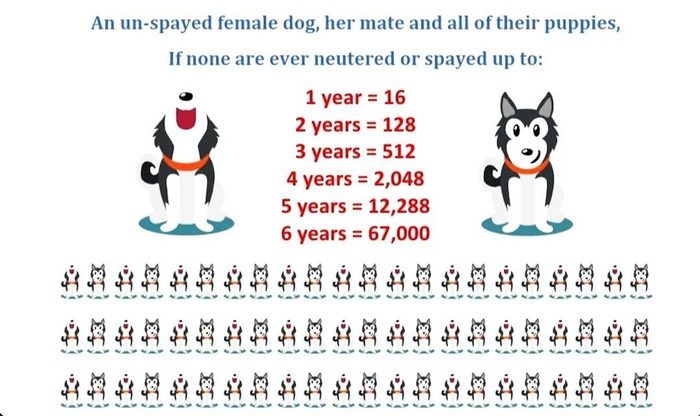
Image source: Husky Haven of Florida
How LSAWL's Fixing Montgomery County Program Helps
Lone Star Animal Welfare League (LSAWL) is a 501(c)(3) nonprofit organization based in The Woodlands, Texas, dedicated to "Bettering the Lives of our Best Friends." Our Fixing Montgomery County program offers heavily subsidized spay and neuter surgeries through various events in partnership with veterinary practices.
Since 2004, the program has completed over 12,000 surgeries, including 1,412 procedures in 2025 alone, surpassing 1,000 surgeries by August 2025. The program serves pet owners across Montgomery County and surrounding communities.
Partner veterinary practices include Bear Branch Animal Hospital, Stone Ridge Veterinary Medical Center, and Montgomery County Animal Shelter.
Through our monthly program, Montgomery County Animal Shelter provides spay and neuter services with Montgomery County Spay Neuter Alliance funding.
Pet owners can schedule affordable spay/neuter surgeries by calling LSAWL’s dedicated hotline at (713) 304-2444.
Frequently Asked Questions
What are the health risks of not spaying my female dog?
Unspayed female dogs face a 7 times higher risk of developing mammary tumors compared to those spayed before their first heat. They are also at risk for pyometra, a life-threatening uterine infection affecting up to 25% of intact females by age 10. Additionally, uterine and ovarian cancers are risks eliminated by spaying, and false pregnancies can cause both physical and psychological distress.
What are the health risks of not neutering my male dog?
Intact male dogs are susceptible to testicular cancer, the second most common cancer in this group, which neutering prevents. They also commonly develop prostate disease, with over 80% of intact males over age 5 affected by benign prostatic hyperplasia (BPH). Perianal tumors driven by testosterone are reduced by neutering, and roaming behavior increases the risk of injuries from vehicle strikes, fights, and getting lost.
Does neutering reduce aggression in dogs?
Yes, neutering reduces aggression in dogs. Intact male dogs are involved in approximately 60% of reported dog bite incidents. Neutering significantly reduces testosterone-driven aggression and inter-dog conflicts, leading to safer interactions with other animals and people.
Are there any risks to spaying or neutering my dog?
While spay/neuter surgeries are generally safe, there are some considerations worth discussing with your vet. Large-breed dogs may have hormonal and developmental factors that affect ideal timing. Spayed/neutered dogs may gain weight more easily, requiring diet and exercise adjustments. Anesthetic risks exist but are minimized through thorough veterinary assessments. For most dogs, the benefits of spaying and neutering significantly outweigh the risks.
At what age should I spay or neuter my dog?
Timing can vary based on your dog's breed, size, and overall health, so the best first step is always a conversation with your veterinarian. They can walk you through considerations like hormonal development and joint health, particularly for larger breeds. What matters most is that it gets done, so don't let the timing question become a reason to wait. The AVMA recommends individualized discussions with your vet to find the right window for your dog.
How can I get my dog spayed or neutered affordably in Montgomery County, Texas?
LSAWL’s Fixing Montgomery County program offers subsidized spay and neuter surgeries through monthly events and partner veterinary practices serving The Woodlands, Conroe, and surrounding areas. Pet owners can schedule appointments by calling (713) 304-2444.
How does spaying and neutering help reduce pet overpopulation?
Spaying and neutering are critical tools in reducing pet overpopulation. Approximately 3.1 million dogs enter U.S. shelters annually, many due to unplanned litters. One unspayed female dog and her offspring can produce up to 67,000 dogs in six years. LSAWL’s Fixing Montgomery County program has completed over 12,000 surgeries locally, helping to reduce shelter intake and improve animal welfare.
Enjoyed this article?
We write these because an informed pet owner is a pet's best advocate. If our content has helped you, consider making a donation to Lone Star Animal Welfare League. Your support helps us keep educating our community and giving Montgomery County and surrounding areas' pets (and the people who love them) a better shot at a healthy life.