Over 1 million dogs in the United States are estimated to be infected with heartworm disease at any given time, according to the American Heartworm Society. Texas ranks among the highest-risk states in the nation for heartworm transmission, due to its warm climate, abundant mosquito populations, and a year-round transmission season. The Houston metro area, including Montgomery County communities such as The Woodlands, Conroe, and Spring, lies within one of the most active heartworm transmission zones in the country.

Heartworm in Dogs: What It Costs, What It Does, and How to Prevent It for $25 a Month
By: Samantha Quinones
The cruel irony is that heartworm prevention costs as little as $25 per month, while treatment for an infected dog can run $1,000 to $3,000 or more, and that's only if the disease is caught before it's too late. Left untreated, heartworm doesn't just make a dog sick. It causes real, prolonged suffering: labored breathing, a heart working overtime against a growing worm burden, and in many cases, death from cardiac complications. This article aims to equip dog owners in Montgomery County with the clinical facts, real cost data, and local resources necessary to protect their pets from this entirely preventable disease.
Key Takeaways
Heartworm disease is caused by Dirofilaria immitis, a parasitic worm transmitted exclusively through mosquito bites.
Texas is a year-round high-risk state; dogs in Montgomery County face risk every month of the year.
Over 1 million U.S. dogs are currently infected; many show no symptoms until the disease is advanced.
Prevention costs $25–$50/month; treatment costs $1,000–$3,000+ and requires weeks of restricted activity.
What Is Heartworm Disease?
Heartworm disease is caused by Dirofilaria immitis, a parasitic roundworm that inhabits the heart, lungs, and associated blood vessels of infected animals. The disease is transmitted exclusively through the bite of an infected mosquito. When a mosquito feeds on an infected animal, it ingests microscopic heartworm larvae called microfilariae. These larvae develop inside the mosquito over 10 to 14 days into infective larvae (L3 stage). When the mosquito bites a new host, the L3 larvae are deposited on the skin and enter through the bite wound.
Once inside the dog, the larvae migrate through tissue and enter the bloodstream, eventually reaching the heart and pulmonary arteries. The full maturation process takes approximately 6 months. Adult heartworms can grow 10 to 12 inches in length and live 5 to 7 years inside a dog. In severe infections, a single dog can harbor up to 250 worms.
Texas A&M Veterinary Medicine & Biomedical Sciences notes that the Gulf Coast region’s warm, humid climate supports mosquito populations year-round, making heartworm a 12-month threat rather than a seasonal one.
Early-stage infection is often asymptomatic, which is one of the most dangerous things about this disease. By the time a dog shows symptoms (a persistent cough, exercise intolerance, fatigue, reduced appetite, weight loss) the worms have often been growing for months. In severe cases, "caval syndrome" occurs: a sudden, life-threatening blockage of blood flow caused by a mass of worms overwhelming the heart. Emergency surgical removal is the only option at that stage, and not all dogs survive it. This is not a slow, peaceful decline. It is a painful, preventable death.
The Real Cost of Heartworm: A Side-by-Side Comparison
The financial case for prevention is overwhelming. Here is what dog owners in Montgomery County can expect to pay.
Prevention (Monthly Oral Preventatives)
- Heartgard Plus (ivermectin/pyrantel): $20–$35/month
- Interceptor Plus (milbemycin oxime): $25–$40/month
- Simparica Trio (sarolaner/moxidectin/pyrantel): $35–$55/month
- Annual heartworm test (required before starting prevention): $45–$75
Total annual prevention cost: approximately $285–$735/year
Treatment (If Dog Tests Positive)
- Diagnostic workup (bloodwork, X-rays, echocardiogram): $300–$1,000
- Melarsomine injections, Immiticide (the only FDA-approved adulticide): $500–$1,500
- Hospitalization and monitoring: $200–$500
- Doxycycline pre-treatment (antibiotic protocol): $50–$150
- Activity restriction period: 6–8 weeks of strict crate rest
Total treatment cost: $1,000–$3,000+
Treatment is not always successful. Dogs with severe infections may not survive treatment.
The FDA has approved melarsomine dihydrochloride (Immiticide) as the only drug for treating adult heartworm infections in dogs.
These are some of the most common preventives, but they are not the only ones. Many other effective heartworm medications are available, and the right one depends on your dog's health, weight, and lifestyle. Your veterinarian can help you choose the best fit.
George's Story: The Real Cost of Heartworm
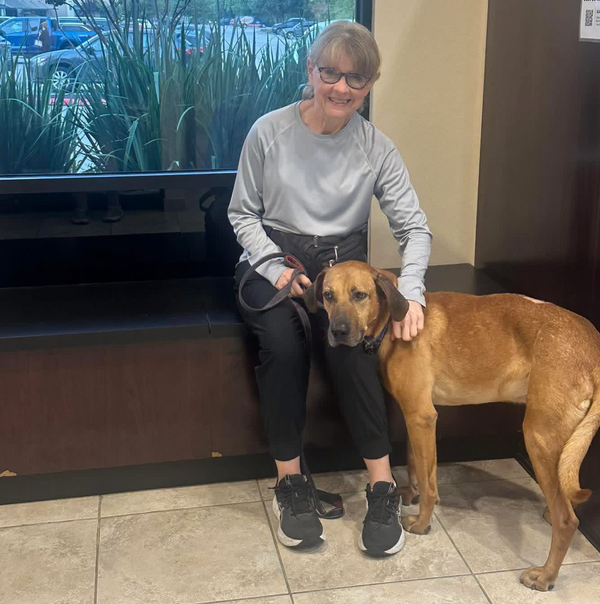
George recently underwent heartworm treatment with support from LSAWL, donor contributions, and Bear Branch Animal Hospital. His three injections alone cost about $1,200, and X-rays, medications, and exams added another $600 — bringing his total treatment cost to roughly $1,800 at rescue pricing. By comparison, at an estimated $25 per month, that same amount could have covered about six years of heartworm prevention for a large dog.
Thankfully, George made it through. Not every dog does. His case is a clear reminder that prevention is not just less expensive, it is far less cruel than the alternative.
Why Montgomery County Dogs Are at Elevated Heartworm Risk
The Houston metro area, including The Woodlands, Conroe, Spring, and Magnolia, experiences warm temperatures from March through November, with mild winters that rarely eliminate mosquito populations entirely. The American Heartworm Society’s incidence maps consistently show Texas, Louisiana, Mississippi, and other Gulf Coast states as the highest-risk regions in the country.
Outdoor dogs, dogs with yard access, and dogs walked near wooded areas, retention ponds, or drainage ditches (common features of Montgomery County neighborhoods) face the highest exposure risk. Year-round prevention is not optional in this region. It is the standard of care. Even indoor dogs are at risk: mosquitoes enter homes, and a single bite from an infected mosquito is all it takes.
Heartworm Prevention Options: What Works and What to Know
Oral monthly preventatives such as Heartgard, Interceptor, and Simparica Trio are the most widely used and highly effective when given consistently every 30 days.
Topical preventatives like Advantage Multi and Revolution are applied to the skin monthly and also protect against fleas, ticks, and other parasites.
Injectable preventatives such as ProHeart 6 and ProHeart 12 are administered by a veterinarian and provide 6 or 12 months of protection in a single injection and are ideal for owners who struggle with monthly compliance.
The American Heartworm Society recommends annual heartworm testing for all dogs, even those on prevention, because no preventative is 100% effective and missed doses can leave gaps in protection. Never start prevention without testing first: giving a preventative to a heartworm-positive dog can cause a severe, potentially fatal reaction as the drug kills circulating microfilariae too rapidly.
All FDA-approved heartworm preventatives require a veterinary prescription.
A Note on Screwworm and Your Prevention Plan
Texas is currently dealing with the return of the New World screwworm, a parasite confirmed in the state in 2026. It is a different threat from heartworm, but it is worth raising with your vet while you are talking about prevention, because the two conversations now overlap.
Here is the connection. Screwworm is a parasitic fly whose larvae infest open wounds, and even a small bite or scratch can be an entry point. No flea and tick product is specifically labeled to prevent screwworm. However, keeping your dog on effective flea and tick control reduces the bites and skin irritation that attract flies in the first place, which is why some veterinarians now treat it as part of the same prevention conversation. Bear Branch Animal Hospital lists these commonly recommended options: NexGard, NexGard Plus, Simparica, Simparica Trio, Bravecto, and Credelio for dogs, and Revolution Plus or Bravecto Plus for cats. Some of these, such as Simparica Trio, also cover heartworm in a single product.
Guidance on this is evolving quickly, so the best step is simple: ask your veterinarian what combination makes the most sense for your dog right now. We’ll be posting a guide soon to learn more about the New World screwworm and how to protect your dog.
Frequently Asked Questions About Heartworm in Dogs
What causes heartworm disease in dogs?
Heartworm disease is caused by Dirofilaria immitis, a parasitic roundworm transmitted through the bite of an infected mosquito. Larvae deposited during a mosquito bite migrate through the dog's tissue, enter the bloodstream, and mature into adult worms in the heart and pulmonary arteries over approximately 6 months. Adult worms can grow 10 to 12 inches long and live 5 to 7 years inside a dog.
How common is heartworm disease in Texas?
Texas is one of the highest-risk states in the U.S. for heartworm disease. The Gulf Coast’s warm, humid climate supports year-round mosquito activity, meaning dogs in Montgomery County, The Woodlands, Conroe, and the greater Houston metro area are at risk every month of the year — not just in summer. The American Heartworm Society’s incidence maps consistently rank Texas among the most affected states nationally.
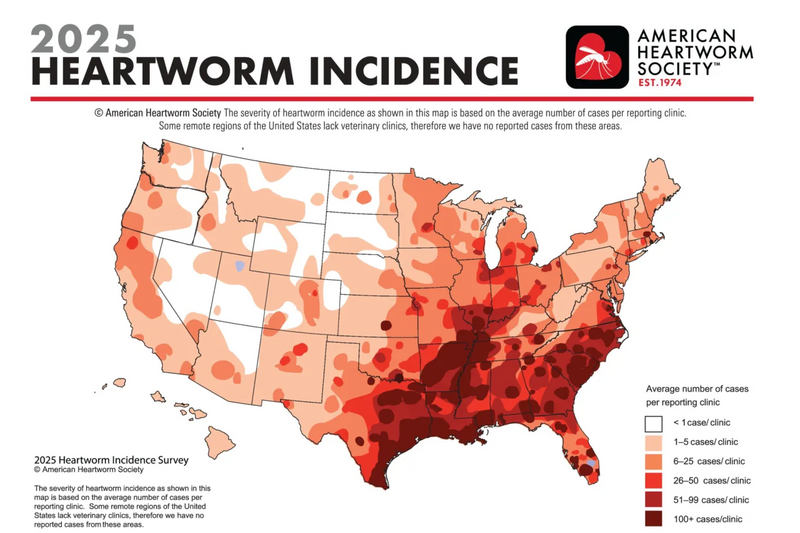
Image source: News Week
What are the symptoms of heartworms in dogs?
Early-stage heartworm infection is often asymptomatic, which is why annual testing is critical. As the disease progresses, dogs may develop a persistent cough, exercise intolerance, fatigue, weight loss, and reduced appetite. In severe cases, caval syndrome — a sudden, life-threatening blockage — can occur, requiring emergency surgery.
How much does heartworm treatment cost?
Heartworm treatment typically costs between $1,000 and $3,000 or more, depending on the severity of infection and the dog's size. Treatment involves a series of melarsomine (Immiticide) injections (the only FDA-approved adulticide) along with antibiotics, diagnostics, and 6 to 8 weeks of strict activity restriction. Prevention, by contrast, costs as little as $25 per month.
What is the best heartworm prevention for dogs?
The American Heartworm Society recommends year-round heartworm prevention for all dogs. Common options include monthly oral preventatives (Heartgard Plus, Interceptor Plus), topical treatments (Revolution, Advantage Multi), and long-acting injectable preventatives (ProHeart 6 or 12). All require a veterinary prescription and should only be started after a negative heartworm test.
Can indoor dogs get heartworms?
Yes, indoor dogs can get heartworms. Mosquitoes transmit heartworms, which can and do enter homes. Even dogs that spend the majority of their time indoors are at risk from a single mosquito bite. The American Heartworm Society recommends year-round prevention for all dogs, regardless of lifestyle.
How can I get affordable heartworm prevention in Montgomery County, Texas?
Affordable options exist at several price points, and local shelter wellness clinics are typically the lowest-cost source.
The Montgomery County Animal Shelter Low-Cost Wellness Clinic (8535 Hwy 242, Conroe) offers both heartworm testing and prevention. As of 2026, a heartworm test is $20, and prevention is available well below retail: a six-month supply of Milbeguard, a generic monthly heartworm preventive, runs about $25 to $40 depending on your dog's weight, and a six-month supply of Advantage Multi, which also controls fleas, is about $105. The clinic is open Wednesdays and Saturdays for wellness services only and cannot treat sick or injured animals. Check mcaspets.org for current pricing and to book.
Online pharmacies such as Chewy, PetMeds, and PetBucket also carry prescription preventives at lower prices, with a prescription from your vet.
LSAWL's role is specific: during a low-cost spay or neuter appointment, you can request a heartworm test at our rescue rate, which you would pay for at the time of service. LSAWL does not provide heartworm prevention. For prevention and pricing, start with the shelter wellness clinic above or talk with your veterinarian.
Is heartworm prevention safe for all dogs?
FDA-approved heartworm preventatives are safe for the vast majority of dogs when used as directed. However, some herding breeds (Collies, Australian Shepherds, Shelties) carry an MDR1/ABCB1 gene mutation that makes them sensitive to ivermectin-based products at higher doses. Owners of these breeds should discuss preventative options with their veterinarian. Critically, prevention should never be given to a dog that has not been tested. Administering a preventative to a heartworm-positive dog can cause a severe reaction.
Protect Your Dog from Heartworm Today
Heartworm disease is preventable, and protection starts with year-round prevention and annual testing. Because the right prevention plan can depend on your dog and on what is happening locally, including the current screwworm situation in Texas, talk with your veterinarian about the best option for your dog. A short conversation now can spare your dog a long, painful, and expensive illness later.
Enjoyed this article?
We write these because an informed pet owner is a pet's best advocate. If our content has helped you, consider making a donation to Lone Star Animal Welfare League. Your support helps us keep educating our community and giving Montgomery County and surrounding areas' pets (and the people who love them) a better shot at a healthy life.